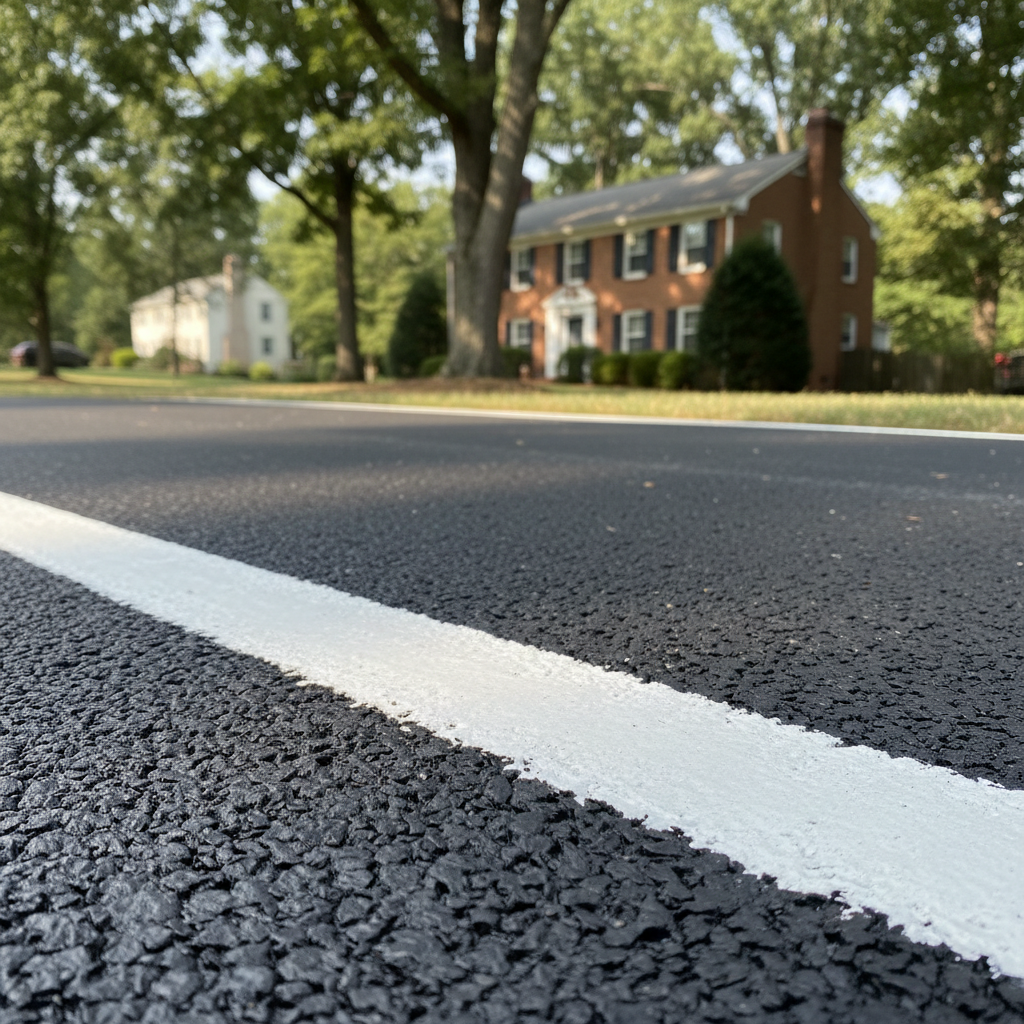
Ever pull into your driveway and wish the layout made a bit more sense, or maybe you have a shared private lane in your neighborhood that needs clear boundaries? Asphalt Striping isn't just for big shopping centers. Around Falls Church, where tight property lines and older, winding suburban lots are common, crisp pavement markings can keep cars off your lawn and make parking easy.
Before you run out to buy a can of spray paint, you need to look at the condition of your pavement. If your surface is crumbling or covered in cracks, painting lines over it is a waste of time. The paint will not bond right to loose aggregate. You have to clean the asphalt thoroughly, sweep away all the grit, and make sure any recent sealcoat has fully cured for at least 1 to 2 weeks. If you throw paint down on fresh sealer too early, the oils underneath will bleed right through and turn your bright white lines brown.
Deciding whether to DIY or hire a professional usually comes down to scale and precision. Here is how that breakdown generally shakes out:
- Painting a simple parking stall or a sports half-court in your backyard using a rented or manual push machine is totally doable for a handy weekend warrior.
- Laying out complex traffic flows, fire lanes, or multi-family shared drives requires commercial-grade layout equipment and strict adherence to local property standards.
- Using professional traffic paint makes a huge difference because cheap aerosol cans from the hardware store wear away under winter snowplows and heavy vehicle tires within a few months.
During the actual Asphalt Striping process, weather matters more than anything else. Coastal Asphalt Solutions deals with plenty of humidity and sudden spring showers here in Northern Virginia. You want to pick a dry day when temperatures stay consistently above 50 degrees. Moisture trapped under the wet paint will cause immediate bubbling and flaking. Measure twice, snap your chalk lines to keep everything straight, and make sure you give the paint enough time to dry completely—usually 2 to 4 hours depending on the sun—before you drive over it.
Coastal Asphalt Solutions sees plenty of DIY attempts that ended up crooked or washed out by the next heavy storm. If you just need a single straight line or a basic boundary marker, grab some chalk and a roller and knock it out yourself. But if you want sharp, durable lines that will not fade by mid-summer, bringing in a professional crew with proper Asphalt Striping equipment usually saves you time, frustration, and a messy second attempt.